

You do not need to rebuild the product from scratch. We migrate WebRTC, SDKs, backend logic, rooms, authentication, and real-time features while preserving key user workflows. An architecture audit, testing, and a phased transition help minimize downtime and operational risk.

LiveKit Migration Services

Migrate safely to LiveKit from Twilio, Agora, Jitsi, Kurento, or a custom WebRTC stack. At Clover Dynamics, we adapt your architecture and prepare everything for future scaling and AI capabilities. Enjoy a seamless LiveKit migration without interrupting key real-time functions.
Companies switch to LiveKit to modernize real-time applications while retaining essential features and integrations. As a LiveKit migration provider, we assess your current architecture, determine the optimal strategy, and gradually migrate your platform to LiveKit Cloud, a self-hosted environment, or a hybrid deployment.
What We Migrate to LiveKit

Audio and Video Calling
One-to-one calls, connection management, media quality controls, and real-time data processing.

Multi-Party Conferencing
Rooms, participants, roles, media management, and scalable connectivity for multi-user sessions.

Screen Sharing
Screen and system-audio sharing with stream management and user permissions.

Recording and Egress
Audio and video recording plus egress workflows for storing and processing media.

Livestreaming
Real-time broadcast workflows, media stream processing, participant handling, and external platform connections.

SIP and PSTN Telephony
Phone numbers, call routing, and interoperability with traditional telephony.

Transcription and Translation
Speech-to-text and language-service integrations for real-time communication.
AI Voice Agents
Speech recognition, synthesis, LLM, and agent-server workflows on LiveKit.

Authentication and Room Management
Authorization, participant roles, room lifecycle, and access control.

Web and Mobile SDKs
Existing user flows and real-time features adapted to LiveKit SDKs.
Related Case Study
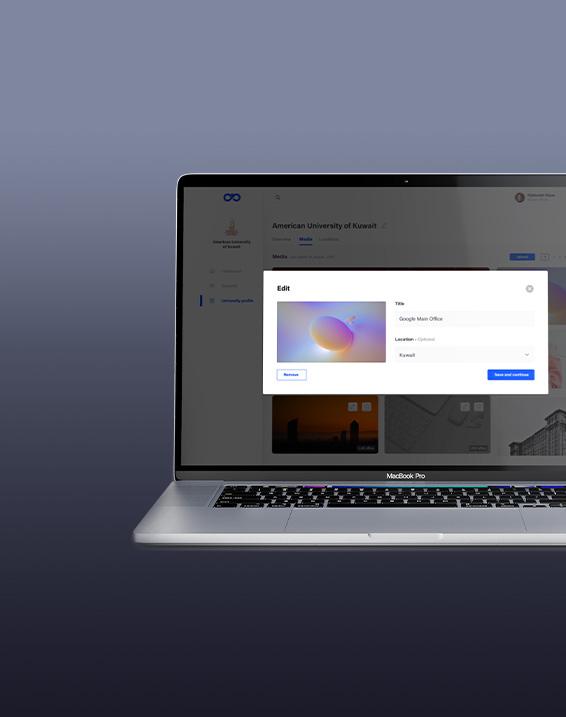
Software for Employment Applications - Hiring platform Khibra
Audio and Video Calling
One-to-one calls, connection management, media quality controls, and real-time data processing.
Multi-Party Conferencing
Rooms, participants, roles, media management, and scalable connectivity for multi-user sessions.
Screen Sharing
Screen and system-audio sharing with stream management and user permissions.
Recording and Egress
Audio and video recording plus egress workflows for storing and processing media.
Livestreaming
Real-time broadcast workflows, media stream processing, participant handling, and external platform connections.
SIP and PSTN Telephony
Phone numbers, call routing, and interoperability with traditional telephony.
Transcription and Translation
Speech-to-text and language-service integrations for real-time communication.
AI Voice Agents
Speech recognition, synthesis, LLM, and agent-server workflows on LiveKit.
Authentication and Room Management
Authorization, participant roles, room lifecycle, and access control.
Web and Mobile SDKs
Existing user flows and real-time features adapted to LiveKit SDKs.


LiveKit Migration From Twilio, Agora, Kurento, Jitsi, and Other WebRTC Platforms
The legacy and LiveKit infrastructures can run in parallel during migration. We analyze architecture and dependencies, adapt client SDKs and backend services, preserve integrations, and validate feature parity and performance before traffic is moved.
Migrate to LiveKit for AI Voice Agents and Real-Time AI
LiveKit enables real-time AI applications such as voice agents, voice interfaces, and intelligent communication systems. Migration can modernize the media architecture while adding AI models, speech-to-text, text-to-speech, and agent workflows with low latency and scalable voice processing.
LiveKit Cloud, Self-Hosted, and Hybrid Migration Options
LiveKit Cloud
A managed environment with built-in scaling, monitoring, and lower operational overhead.
Self-Hosted LiveKit
Full control over infrastructure, data, configuration, security, and updates.
Kubernetes-Based Deployment
Automated scaling, high availability, and centralized operational management.
Private Cloud
Deployment in a controlled private environment for stronger network and data governance.
Hybrid Architecture
A mix of LiveKit Cloud and private resources for flexible traffic and workload distribution.
LiveKit Cloud
A managed environment with built-in scaling, monitoring, and lower operational overhead.
Self-Hosted LiveKit
Full control over infrastructure, data, configuration, security, and updates.
Kubernetes-Based Deployment
Automated scaling, high availability, and centralized operational management.
Private Cloud
Deployment in a controlled private environment for stronger network and data governance.
Hybrid Architecture
A mix of LiveKit Cloud and private resources for flexible traffic and workload distribution.
Our LiveKit Migration Process


Build AI-Native systems with intelligence at the core - Not as an add-on
Solutions and Use Cases We Support
AI Voice and Contact Center Platforms
Modernize voice workflows while preserving telephony, routing, and enterprise integrations.
Video Conferencing and Collaboration
Move meetings, rooms, screen sharing, recording, and participant workflows to LiveKit.
Telehealth and Remote Consultation
Preserve secure real-time communication while improving scale and maintainability.
Education and Virtual Classrooms
Migrate interactive lessons, recordings, messaging, and multi-user video sessions.
Live Streaming Products
Move low-latency broadcast workloads and interactive media features.
Embedded Real-Time SaaS Features
Replace a legacy communication provider without disrupting the rest of the SaaS product.
Related Case Study
Software for Employment Applications - Hiring platform Khibra
AI Voice and Contact Center Platforms
Modernize voice workflows while preserving telephony, routing, and enterprise integrations.
Video Conferencing and Collaboration
Move meetings, rooms, screen sharing, recording, and participant workflows to LiveKit.
Telehealth and Remote Consultation
Preserve secure real-time communication while improving scale and maintainability.
Education and Virtual Classrooms
Migrate interactive lessons, recordings, messaging, and multi-user video sessions.
Live Streaming Products
Move low-latency broadcast workloads and interactive media features.
Embedded Real-Time SaaS Features
Replace a legacy communication provider without disrupting the rest of the SaaS product.
More Case Studies

Metaverse Software Development Services for SpaceMetaverse
SpaceMetaverse is an innovative Canadian startup revolutionizing the digital NFT art and commerce scene. Their mission is to empower users with robust builder tools, enabling them to effortlessly design and bring to life immersive commerce spaces, free from any limitations. With their help, users can purchase top-notch products, immersing in a one-of-a-kind shopping adventure as if they were strolling through a luxurious mall. They can engage with others in dynamic spaces, fostering new connections and sparking exciting conversations.
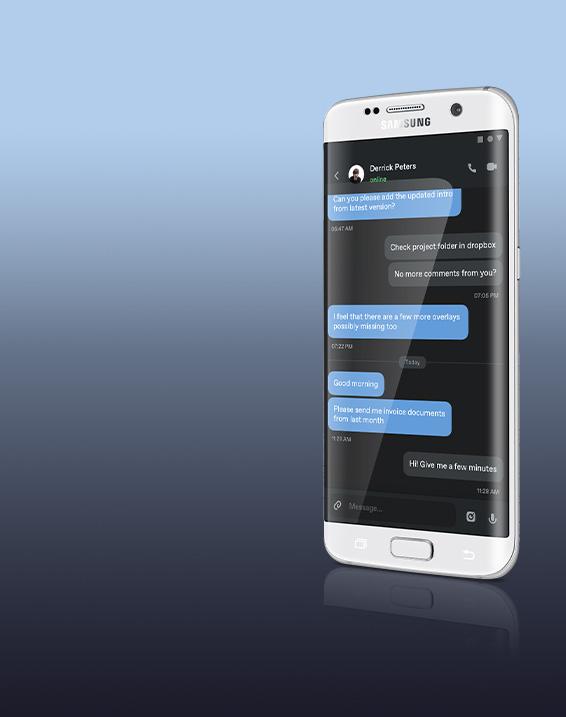
Secure Messaging App Development for Business
Our client needed a solution for highly secure and encrypted communication within the corporation, operating in North America and Asia.


What you get with Clover
Voice and conversational AI interfaces built by Clover cut handling time by more than 50% in several client environments
Our Awards





1/12
Clover Dynamics has been key to our rapid growth. They delivered exceptional quality and complex features, helping us achieve triple-digit growth in under 5 months. I highly advise any startup looking to find the right tech capabilities to collaborate with Clover Dynamics.

Fahad Al-Sabah
Founder&CEO, Khibra
Our Awards
Industries Solutions



Automate workflows end-to-end with autonomous AI Agents that decide and transact
Frequently asked questions
Yes. We migrate client applications, backend logic, real-time events, rooms, and core Twilio features into a LiveKit architecture.
Yes. We adapt SDK integration, real-time communication, track management, and backend code while preserving existing application behavior.
Yes. This involves migrating media workflows, rooms, events, and integrations to the new platform.
Parallel deployment, phased traffic switching, and gradual cutover are used to minimize downtime and user disruption.
The choice depends on control, security, scalability, operations, and regional requirements. We assess those constraints before recommending an option.
Yes. Recording, SIP and PSTN workflows, and the integrations required around them can be retained.
Yes. LiveKit supports real-time audio, speech-to-text, text-to-speech, LLMs, and agent-server workflows.
A typical migration takes 4–8 weeks. Complex products may take 2–3 months.
Most migrations range from $15,000 to $50,000. Complex enterprise programs can exceed $50,000.
We use architecture audits, feature and performance testing, parallel deployment, controlled traffic migration, and monitoring of real-time events.
Our approach combines backend and real-time communication expertise with structured migration planning across LiveKit Cloud, self-hosted, and hybrid architectures.